Understanding long-term variability of the Earth’s environment and climate is crucial for putting observed modern changes into perspective. The study of past conditions provides information on pre-anthropogenic baseline conditions and natural rates-of-change, and allows us to study feedbacks and interactions between different components of the Earth’s environment and climate systems.
At the Department of Geoscience, we have a long tradition history of research in dating and reconstructing past climates and environments using both proxy data and modelling approaches. The research in this area covers a wide array of topics, ranging from the interactions between individual grains under a moving glacier to modelling global sea level on millennial timescales, and from Holocene reconstructions of ocean currents around Greenland to Cenozoic terrestrial paleoclimate and its impact on early hominin evolution and migration.
To enable cutting-edge research in these different areas, the department hosts various laboratories, including a processing lab for cosmogenic nuclides, an organic geochemistry lab, advanced microscopy facilities, geotechnical and geochemical sediment core scanners, isotope geochemistry capabilities, and access to high-performance computing infrastructure.
Paleoclimatology and paleoceanography:
Reconstruction of past climate variability, ocean circulation, sea-ice cover, and deep-water formation from sedimentary archives, using a wide array of different proxies.
Cryosphere–climate interactions:
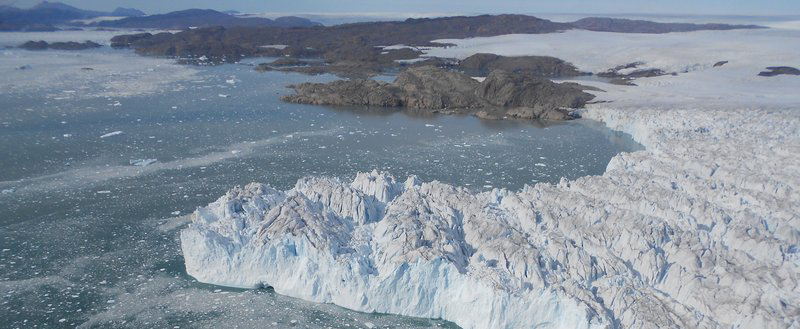
Studies of glacier processes, ice-sheet dynamics, sea-level change, and tipping points in the ocean–atmosphere–cryosphere system across polar, temperate, and tropical regions.
Earth surface and terrestrial processes:
Reconstruction of paleoclimates and paleoenvironments shaped by wind, water, and ice, including soil development and terrestrial vegetation dynamics.
Geochemistry and method development:
Application and development of stable isotopes, trace elements, biomarkers, organic geochemistry, and cosmogenic nuclides.
Human–environment interactions:
Interdisciplinary research linking geoarchaeology, hominin evolution, and archaeology to environmental and paleoclimate change, focusing on how climate and landscape dynamics have influenced human evolution, migration, behavior, and societies.
Monitoring and observation of change:
Integration of greenhouse gas monitoring, remote sensing, and modern analogues with paleo-records to bridge past, present, and future Earth system behavior.
Carbon and nutrient cycling:
Investigation of carbon cycling, paleoproductivity, nutrient dynamics, and carbon burial in marine and terrestrial systems, including the role of biota in carbon uptake and storage over geological time.